

How and where did your musical journey start?
What was the moment when you knew you wanted to progress and felt you could go further?
How did you become the soloist with the Kirkland Civic Orchestra?
What are you looking forward to in your non-musical life or musical life after this concert?
KCO: How and where did your musical journey start?
Isabella Jie: Well, I started learning piano when I was 3, so a long time ago. Probably like many kids out there, my parents wanted me to do piano lessons. It was actually my mom’s dream to be a pianist. But unfortunately, she wasn’t able to pursue that herself due to her circumstances growing up. When she had me, she was very determined that I was going to be a pianist, right from the start.
KCO: And where was this taking place?
Isabella Jie: This was in my hometown in Medan, Indonesia. Back then, we didn’t have internet, or convenient access to good and wide range of music. A lot of what I learned came from laserdisc recordings that my dad would bring back from business trips to Singapore. He would often ask people at the store for recommendations on which pianists to listen to. That was really my only window to the outside music world because music education in my hometown was very limited back then.
KCO: Was your mother your teacher?
Isabella Jie: No. Well, she tried to be, because she has a great ear, but she doesn’t actually play the piano. She would listen to recordings of great pianists all the time, so she had a very clear idea of what she wanted me to achieve. A big part of my early study was really just listening. But I wasn’t always able to translate what I was hearing into how to actually play it physically.

KCO: You were just doing it however you could? No teacher?
Isabella Jie: I was playing with a lot of tension and improper technique. It was difficult, for sure.
I did study with teachers, but because the musical resources in my hometown were quite limited at the time, it was challenging to find guidance that matched the level I was working toward.
KCO: Did you ever play anything else?
Isabella Jie: No! Just piano and ear training, lots of just practicing and listening.
KCO: What was the moment when you knew you wanted to progress and felt you could go further?
Isabella Jie: I think I have a somewhat unusual story, because I was never really given the choice to do anything else as piano was just always the path. So I followed it and did all sorts of competitions, gave solo recitals at a very young age, and eventually studied piano performance in college. But for a long time, I wasn’t actually in love with music. It felt more like a responsibility than something I enjoyed.
Even in college and during my master’s, I struggled with that. I had moments where I really questioned what I was doing, especially when I compared myself to people who had a much more solid technical foundation. My college teacher really tried to help me, and I’m grateful for that, but I think there was too much internal resistance back then. I also kept hearing from teachers that I had potential, but that there was always some kind of mental block in the way.
Things started to change a little bit towards the end of college, mostly because of friendships. I guess, sometimes just having more open, honest conversations about music can make it feel less intense and more fun.
But the real change happened when I went to the University of Minnesota and started studying with Alexander Braginsky. He immediately saw both the potential and the block when I finished playing my audition, did not waste a second to tell me that he really wanted to work through it all with me.
Around a year after I moved to Minnesota, I met my future husband, Jay, who was doing his doctorate program in guitar performance. We talked a lot about music, and that had a big impact on me. For the first time, I actually wanted to engage with music differently. I started asking more questions about my playing—why things worked, why they didn’t—and really digging into my technique. That was probably the first time I felt like I was choosing this path for myself, and that I could actually move forward because I wanted to.
KCO: When you’re still in that part of the relationship, those conversations can be so intense. You can talk about anything.
Isabella Jie: Exactly, yes.
KCO: You start in Indonesia, then you’re at the University of Minnesota. What happened in between?
Isabella Jie: I left Indonesia when I was 14 and went to Canada for high school. I actually skipped a year because I tested out of a few grades, so I was quite young when I eventually started college. I spent two years doing high school, then went to the University of Toronto for my undergraduate degree.
After that, I went to Indiana University for my Master’s and Performer’s Diploma, where I had a full scholarship and assistantship, and I was there for three years.
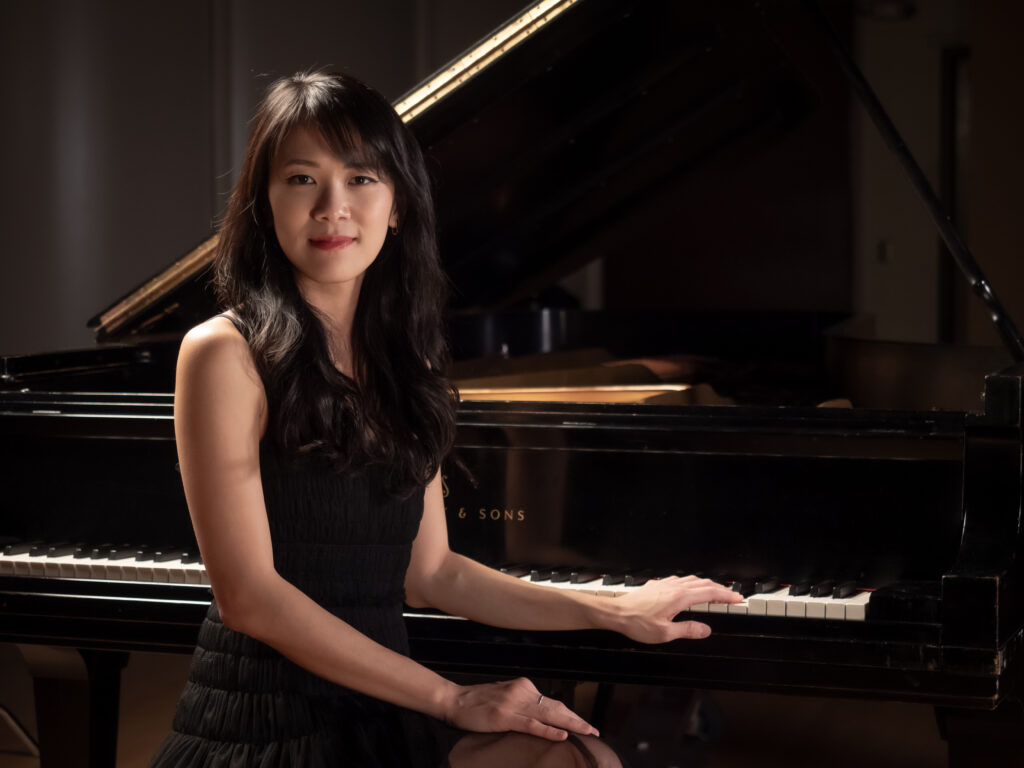
Then I moved to Minnesota. For a long time, the plan was very straightforward, ever since my parents set me on this path, my goal was to finish a doctorate and then go back to Indonesia to teach. Given the musical environment there, that would have been a very stable and clear career path for me. That was the plan for many years… until I met my husband.
<laughter>
KCO: And then you somehow arrived in the Pacific Northwest.
Isabella Jie: That was because my husband decided to change careers after he graduated. He now works at a commercial cabinet company in Olympia. So, we moved here.
KCO: When you were in Canada, were you in the Toronto area?
Isabella Jie: Yes, I was in Toronto.
KCO: How did you become the soloist with the Kirkland Civic Orchestra?
Isabella Jie: I actually was recommended. Lots of connections are being drawn here, but it all started after I recorded a piano solo album of works by Bruce Stark in March last year. His music is very jazz-inspired, almost a mix of jazz and classical, which really suits my style of playing.
My director at the University of Puget Sound, Tracy Doyle, heard the recording, and she and her husband, James Doyle, really liked it. Then I received an email from James Welsh, who is one of the conductor candidates, saying that James Doyle had recommended me as a soloist for Rhapsody in Blue on his program.
That’s essentially how it happened. Rhapsody in Blue has actually been on my bucket list for a long time, so I was very excited to say yes to the opportunity!
KCO: It’s a fun piece. Everybody likes it. Sometimes the hardest thing is getting the orchestra to be jazzier. It’s not always everyone’s comfort zone.
Isabella Jie: Yes, definitely. This is going to push everybody’s comfort zone, like you said.
KCO: But it sounds like it’s right in your comfort zone.
Isabella Jie: Yes, I really love it! I didn’t even realize it at first. When I recorded the Bruce Stark album, it was just a joy. I had so much fun playing it. It’s very virtuosic and challenging, but I really enjoy that mix of jazz and classical.
Bruce Stark was actually looking for a pianist to record his piano works, which is very specific in that style. I didn’t know him at all at the time, but he came across one of my videos on YouTube which I didn’t even post myself. And he emailed me, and he said something along the lines of hey, I saw this video of yours on YouTube, like, 10 years ago, and I think you’re perfect for my work, can we meet? That was how I was introduced to this style of music
<laughter>
KCO: Well, I look forward to playing the Rhapsody.
KCO: What are you looking forward to in your non-musical life or musical life after this concert?
<more laughter>
Isabella Jie: It’s funny because everything in my life is all music, you know? But outside of that, I really enjoy simple things. I love board games, going out with friends, trying new restaurants, and just exploring different parts of a city. I also enjoy cooking and food in general.
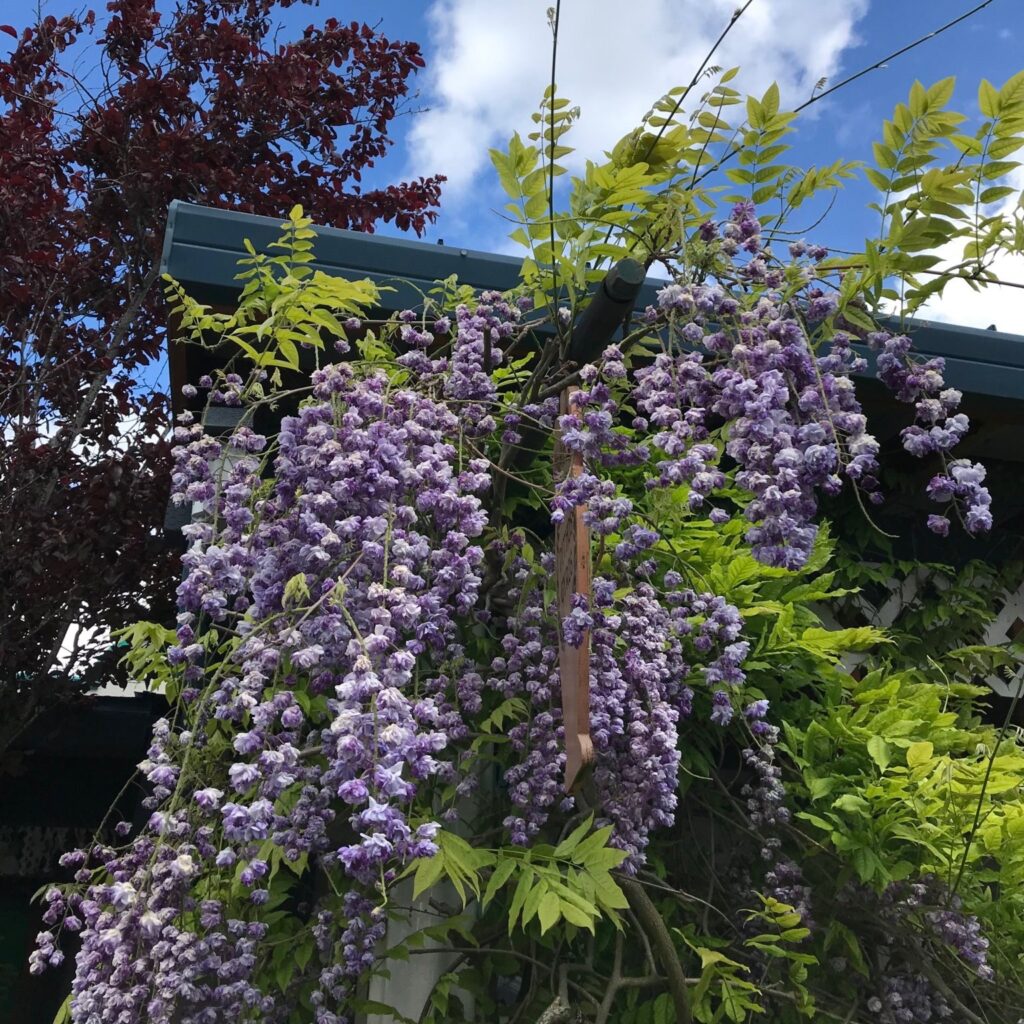
It can be hard to make time for those things during the school year, when everything is very packed. But in the summer, I try to slow down a bit—do some gardening, or just explore all the things I love. I really enjoy that balance.
In terms of musical life, I would say I also really love teaching. It never really feels like work to me. Even with my students, I often say it feels more like something fun than a job.
KCO: I know what you mean. You get the opportunity to really engage with somebody. Time disappears.
Isabella Jie: Yes, being engaging and having an inquisitive conversation is really nice. With teaching, I feel like I actually improve as a musician myself. A lot of things in my playing became clearer once I started teaching, because you begin noticing things differently. I’ll find myself thinking, how would I explain this to a student? How do I fix this in a way a 10-year-old could understand? And in doing that, I have to really understand it myself.
At the university, I feel very much part of a growing musical community. It’s really rewarding to see how much students develop over four years. It keeps things feeling fresh for me as well.
I feel very lucky that all of my work, whether at the University of Puget Sound, Tacoma Community College, or with my private piano students, gives me space for exactly these kinds of conversations. It all feels connected in that way. It’s really what I love doing.
KCO: That’s awesome. I really appreciate your time.
Thanks to Isabella for the interview on April 27, 2026.
by Francis X. Langlois – tuba player in the KCO
